When Should Your Business Upgrade Its Access Control System? A Louisville, KY & Southern Indiana Guide
When Should Your Business Upgrade Its Access Control System? A Louisville, KY & Southern Indiana Guide
Businesses rarely think about their entry system until a door stops unlocking, an employee leaves without returning a key, or a property manager needs to control access across multiple buildings. Those situations reveal why commercial access control upgrades in Louisville, KY are about more than replacing a card reader: a dependable system has to coordinate door hardware, credentials, network connectivity, security cameras, and day-to-day operations.
OVC Cabling helps businesses evaluate commercial access control installation, low-voltage infrastructure, and connected security requirements across Louisville and the neighboring Southern Indiana market. We work with the real conditions of offices, distribution buildings, commercial entrances, and controlled gates—not just attractive diagrams of security equipment.
If your existing system is becoming difficult to manage, use this guide to spot warning signs, plan a practical upgrade, and discuss the scope with a local commercial low-voltage contractor. To explore our broader offerings, visit OVC Cabling commercial security solutions.
Seven signs your commercial door access system needs attention
1. Employees still share keys, codes, or credentials
Shared PINs and untracked keys make it difficult to determine who entered an area. A modern business key card entry system can assign credentials to individual staff members and remove access when roles change. Depending on the platform, a site manager can also apply different access schedules for deliveries, cleaners, and contractors.
2. Card readers work inconsistently
An unreliable badge reader is not always a failed reader. The trouble may involve cabling, power supplies, controller communication, the credential itself, or door hardware. A proper assessment looks at the full access-control path before equipment is replaced. For an occupied commercial building, identifying the real cause can prevent avoidable disruption.
3. You have no useful entry history
Many electronic access control systems record successful and denied credential attempts, subject to the software configuration and retention settings. When managers need to investigate an unexpected entry, a timestamped log is often more useful than guessing who had a physical key.
4. Your business added entrances or departments
An installation that worked for a small office may become limiting after an expansion. New warehouse areas, second-floor suites, staff-only rooms, or a second location can create demand for multi-door access control installation and better user management.
5. Security cameras and doors are managed separately
Video surveillance and controlled entry solve different problems. A compatible integration may help staff review footage around a door event. OVC Cabling's commercial security systems cover CCTV, access control, and supporting infrastructure, making this an important planning discussion for businesses seeking a coordinated system.
6. A gate or parking entrance needs better control
At a commercial gate, authorized entry may depend on a reader, keypad, operator, intercom, or control device. Existing gates also need a review of safety sensors, release arrangements, weather exposure, and power. Explore OVC Cabling's commercial security solutions when planning controlled entrances and related security infrastructure.
7. No one knows what is connected in the equipment closet
An undocumented network rack, unlabeled power supply, or tangled low-voltage cabling can make future service slower. A commercial access control wiring upgrade may involve tracing controller connections, identifying cable routes, and documenting devices before any new equipment is selected.
What a commercial access control upgrade may include
A good upgrade starts with a site walk-through and a list of doors, gates, users, and access rules. Not every facility needs to replace the complete system. In some cases, compatible readers or controllers can be retained, while other sites need a broader redesign.
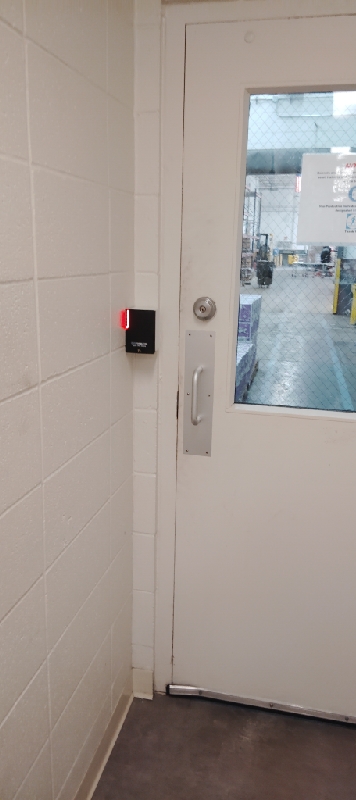
Card readers and key fobs: RFID readers, employee badges, key fobs, and selected mobile credentials can support controlled access when they work with the chosen controller and software. A commercial card reader installation should also account for mounting location, weather exposure, and accessibility.
Electronic locking hardware: Commercial doors may use electric strikes, electrified locks, or magnetic locks when appropriate. The correct choice depends on existing door construction, the intended security function, and legal egress requirements. Do not assume all locks work on every doorway.
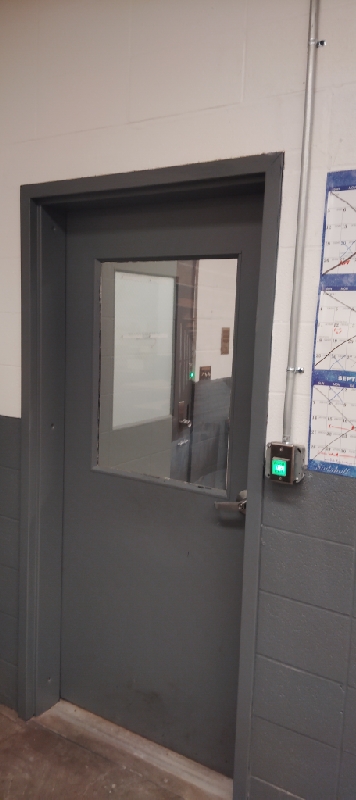
Request-to-exit devices: Exit buttons, sensors, and egress hardware are particularly important where occupants must leave safely during normal use or emergencies. Any access control design should be reviewed for applicable life-safety, fire, and accessibility rules.
Controllers, power, and wiring: Readers need dependable communication with access controllers. Power supplies and backup provisions should be sized for the devices in use. OVC's structured cabling services provide a relevant foundation for connected security projects.
Management software: Some businesses need locally managed access permissions, while others prefer a cloud-based platform with remote administration. Features, recurring fees, internet dependencies, and privacy needs should all be compared before selecting a system.
Door access control and CCTV: why integration matters
Suppose an employee arrives before opening hours and uses an authorized credential. The access log might show when the door was used. A camera at that entrance may provide the visual context, if recording and integration are properly configured.
For commercial CCTV and access control integration, plan reader placement and camera coverage together. Avoid directing cameras into private spaces, and establish appropriate retention and user-access policies. The technical plan should also cover cabling capacity, recorder or network video equipment, cybersecurity, and power requirements.
The business goal is not simply more hardware. It is a system that staff can manage with fewer blind spots and a clearer record of events. For more about the underlying network, read OVC's commercial network cabling installation guide.
Commercial gate access control for parking areas and facilities
Gates are an often-overlooked part of commercial access control in Louisville. A company may secure office doors while leaving its service yard, parking structure, or deliveries entrance dependent on a manually shared code.
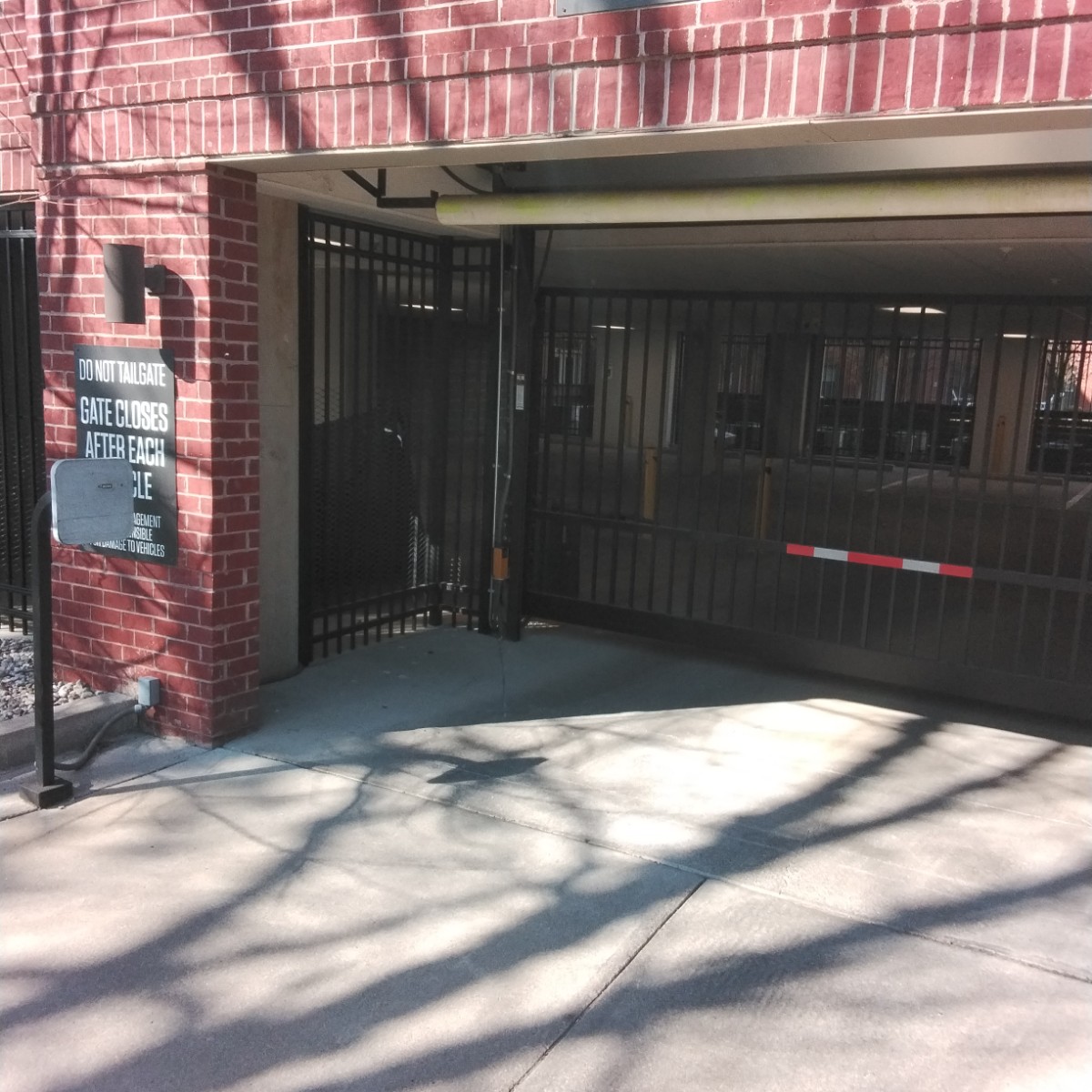
A commercial gate access control system may require coordination between electronic credentials, the gate operator, appropriate pedestrian access, and vehicle safety devices. Facilities may also need temporary vendor credentials or scheduled access for deliveries. The configuration will differ between an outdoor pedestrian gate and a vehicle entrance.
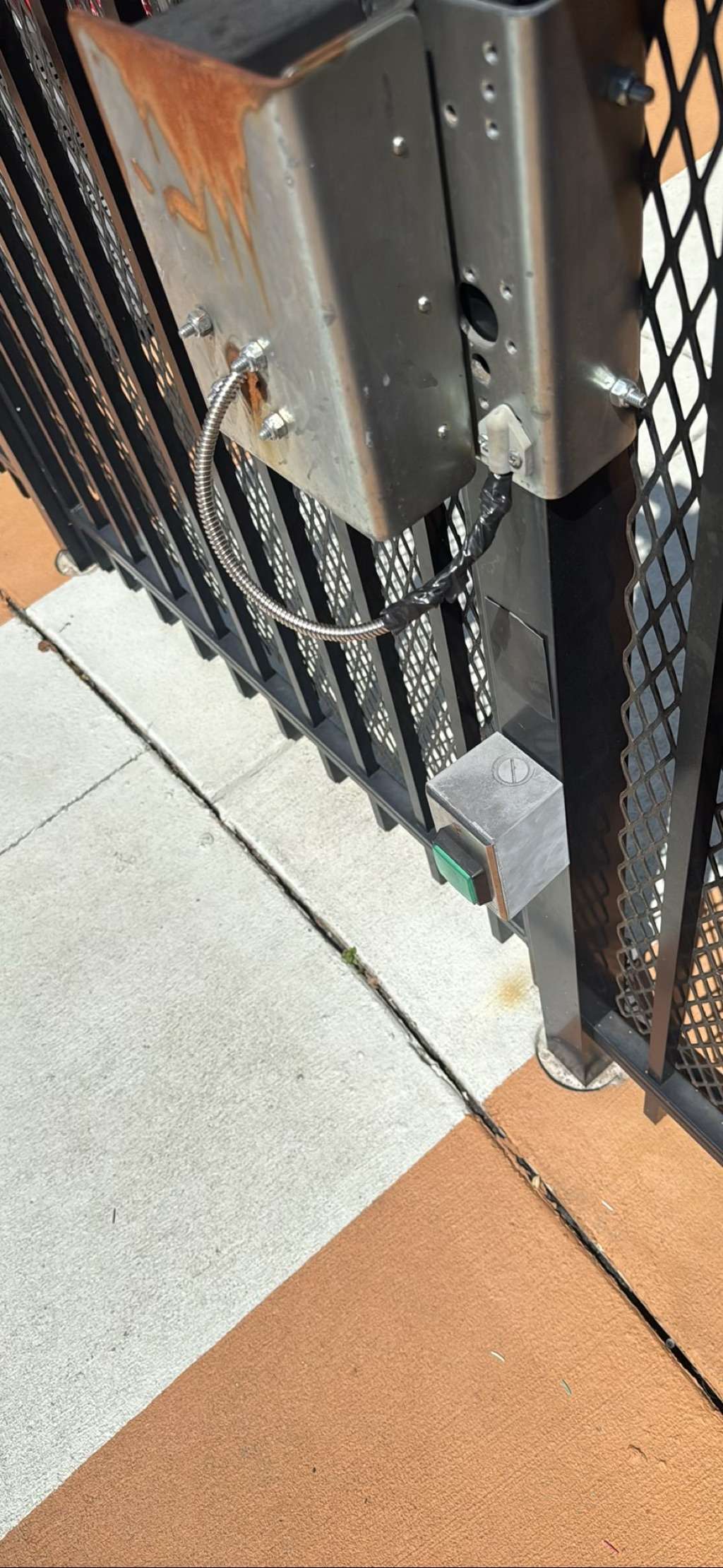
The supplied project images illustrate gate hardware and reader installations. They are useful for showing the real-world variety of access points, not as proof that every photographed setup uses the same model or supports the same features.
[PHOTO: Outdoor gate access hardware | 2025-03-10_19_33_47.jpeg]
What does an access control installation process look like?
For a new commercial door access control installation in Louisville, KY, the first step is identifying what the facility needs to protect. Make an entrance inventory and separate public doors, employee-only doors, server rooms, loading docks, and controlled gates. Then document user groups and the times they need access.
Next, assess the existing locks, door frames, fire and emergency-exit arrangements, controller locations, cable paths, and available power. Some projects can reuse infrastructure; others require new low-voltage runs or equipment closet work. OVC Cabling's commercial fiber optic and cabling services cover related connectivity work for commercial facilities.
Once an approach is approved, installation should coordinate the door hardware, cabling, controllers, and software configuration. Testing must include authorized entry, rejected credentials, door behavior, and the applicable emergency-egress condition. Finally, administrators should receive a clear record of credentials, device locations, and how to add or revoke access.
When planning a project, ask how installation will be phased around operating hours and which work requires coordination with a door hardware specialist or other licensed professional.
Who needs these systems? Commercial applications around Kentuckiana
Offices and professional suites: Restrict staff-only areas, manage employee turnover, and secure internal rooms without distributing another set of keys.
Warehouses and logistics facilities: Coordinate access at staff doors, storage areas, shipping offices, and service entrances. A warehouse access control system should reflect actual shift schedules and contractor movement.
Retail stores and restaurants: Protect stockrooms, management offices, equipment closets, and back-of-house areas while keeping customer paths open and safe.
Property management and multi-tenant buildings: Separate tenant permissions from shared service access, and establish an efficient process for credential changes when occupants move.
Parking facilities and commercial gates: Connect controlled pedestrian and vehicle entrances to a realistic access plan. Physical site conditions and applicable gate safety requirements matter as much as software features.
Where OVC Cabling can discuss commercial access control projects
OVC Cabling identifies Louisville, KY, and Clarksville, IN, as key service markets, with a Jeffersonville office. For projects elsewhere in the surrounding area, confirm scheduling and coverage directly with the team.
In Louisville, Kentucky, common local search needs include commercial access control installation Louisville KY, key fob door entry Louisville, business card reader installation, and commercial door security systems. Relevant neighborhoods and nearby communities include Downtown Louisville, East Louisville, St. Matthews, Middletown, Jeffersontown, Lyndon, Hurstbourne, Prospect, Anchorage, Shively, Fern Creek, and Okolona.
South and east of the city, property managers may also search for solutions in Shepherdsville, Hillview, La Grange, Crestwood, and Shelbyville. Each location has different building types and project requirements, so location-specific pages should describe genuine services and local conditions rather than repeat the same paragraph with a different city name.
In Southern Indiana, priority markets are Clarksville, Jeffersonville, New Albany, Sellersburg, and Charlestown, followed by relevant nearby communities such as Floyds Knobs and Georgetown. Search terms worth evaluating include commercial access control Clarksville IN, access control installer Jeffersonville IN, and commercial door entry systems New Albany IN. These are topical keyword targets, not confirmed search-volume or difficulty rankings.
Frequently asked questions about commercial access control upgrades
Can an existing card reader system be upgraded without replacing every door?
Sometimes. Compatibility between the existing controller, credential technology, software, and lock hardware determines what can be reused. An onsite review is the best starting point.
What is the difference between a key fob reader and a keypad entry system?
A key fob typically identifies an issued credential. A keypad accepts a PIN. Some systems support both. The best option depends on user turnover, security level, and operational convenience.
Can a commercial security camera system work with door access control?
Compatible systems may connect door events to recorded footage or support a shared management workflow. Confirm integration features before choosing equipment.
How much does commercial access control installation cost in Louisville?
Pricing varies with the number of controlled entrances, existing wiring, door hardware, controllers, software, and integration needs. A custom quote is more useful than a generic per-door estimate.
Can an access control system manage an exterior gate?
Many systems can manage appropriate gate-access devices, but gate operators, safety requirements, and hardware compatibility must be reviewed before integration.
Who should manage credentials after installation?
Assign at least one trained administrator, establish a documented procedure for new hires and departing staff, and regularly review access permissions. Avoid sharing administrator accounts.
Get a commercial access control assessment from OVC Cabling
If your business is dealing with unreliable readers, disconnected security cameras, outdated access codes, or plans for additional doors, start with a discussion of your current facility. OVC Cabling provides commercial low-voltage, access control, CCTV, and network infrastructure services across its core Louisville and Southern Indiana market.
Explore our services, learn about OVC Cabling, or request a quote. Call (502) 503-4993 to discuss your commercial security needs.
OVC Cabling — Connecting Today. Powering Tomorrow.
